Keep job info organised
Stop hunting for Mrs. Johnson's phone number.
The phone rings. You type a name or reg. Full picture before the customer finishes their question.
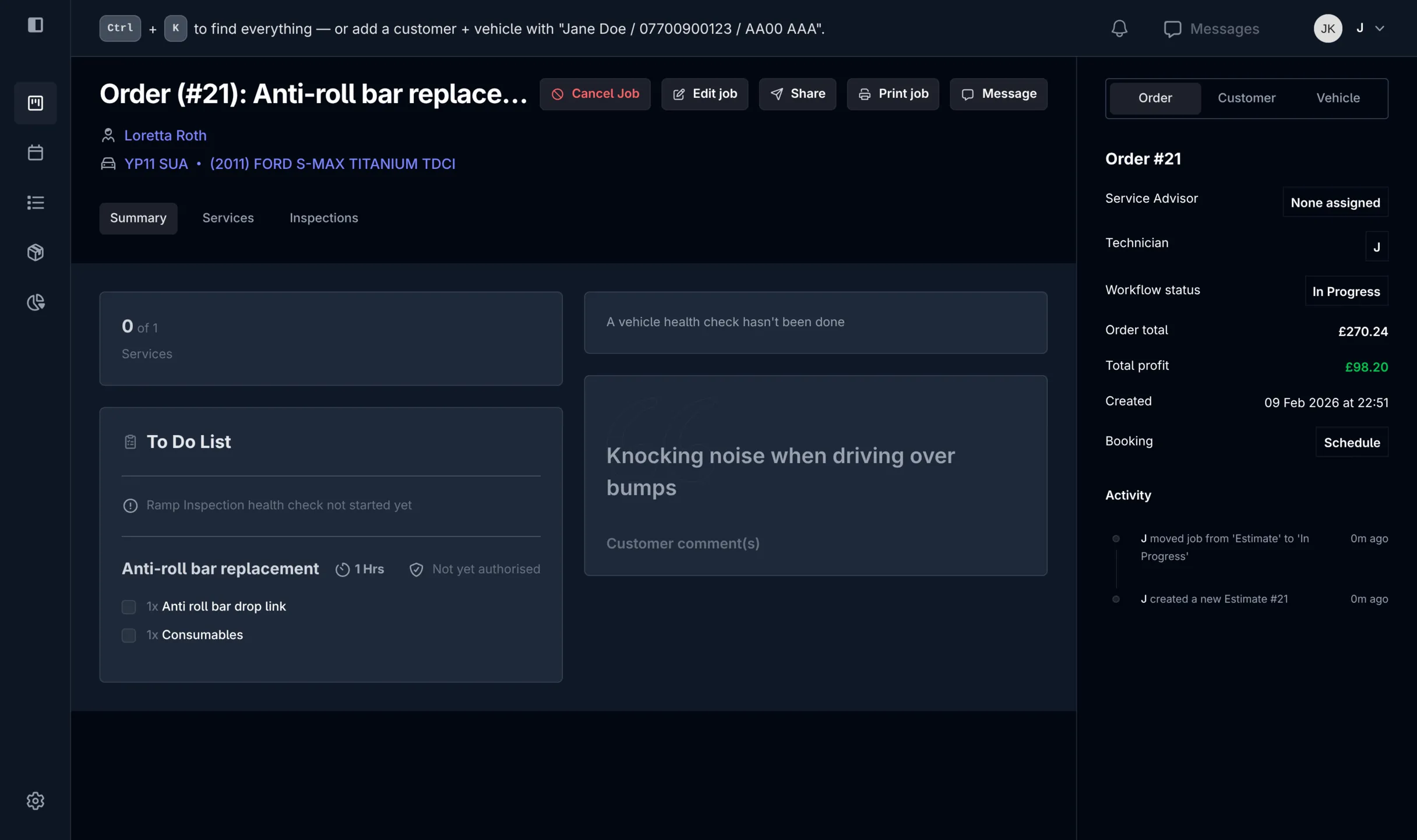
You know exactly what's happening with every car on the ramps. But finding the paperwork? That's a different story.
Phone numbers on post-its. Part receipts in overall pockets. Job cards buried under other job cards. Half the history lives in a notebook, the other half in a WhatsApp thread or a spreadsheet someone started two years ago. When the phone rings and a customer asks about their Corsa service, you're hunting through three different places trying to find when it was last MOT'd.
Every one of those calls takes five minutes longer than it should. More ringing, more interruptions, more of that sinking feeling every time the phone goes. And at the end of the day, you're still in the office at half seven trying to match receipts to invoices because nothing is in one place.
What your front desk actually gets:
- Instant customer lookup. Type a name or reg and everything is right there. Service history, MOT dates, previous advisories, outstanding work. All on screen while the customer is still on the phone. No hunting, no callbacks, no "I'll have to check and ring you back."
- Job history that actually helps. See exactly what was done last time, which parts were used, and who authorised it. History is linked to the vehicle, not just the individual job, so nothing gets lost when you close out a job card.
- Part receipts linked to jobs. Upload supplier invoices straight to the digital job card. You always know what parts went where and what they cost. And when a customer disputes a bill six months later, you've got the proof right there.
A calmer front desk. Faster answers on the phone. And the kind of evening where you lock up at half five instead of sitting in the office matching receipts to invoices.
The other half of getting that evening back is killing the triple-entry on every job and the repeat phone calls that interrupt every five minutes.